
In today’s digital landscape, programming has become one of the most sought-after skills. Whether you’re a student, an aspiring software engineer, or a seasoned developer, picking the right programming language can really boost your career prospects.
As we look ahead to 2026, companies are on the hunt for developers skilled in areas like artificial intelligence, cloud computing, cybersecurity, mobile app development, and full-stack web development. The language you choose should align with your career aspirations, but some languages shine brighter due to their versatility, demand, and robust developer communities.
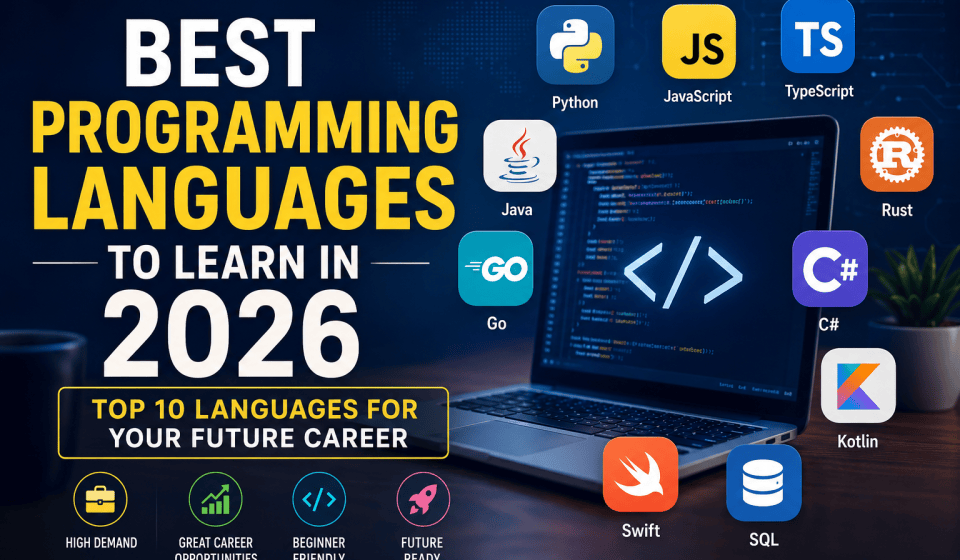
In this guide, we’ll dive into the top programming languages to learn in 2026 and discuss why each one is worth your time.
1. Python
Python remains the go-to programming language for both newcomers and seasoned pros. Its straightforward syntax and extensive ecosystem make it a great fit for nearly every kind of software development.
Why Learn Python?
- Easy to read and write
- Perfect for beginners
- Widely used in AI and Machine Learning
- Fantastic for automation
- A vast array of libraries
Popular Uses:
- Artificial Intelligence
- Data Science
- Web Development
- Automation
- Cybersecurity
- Game Development
Top Companies Using Python:
- Netflix
- Spotify
- Dropbox
2. JavaScript
JavaScript is the backbone of almost every modern website. If you’re aiming to become a web developer, mastering JavaScript is a must.
Why Learn JavaScript?
- Runs directly in browsers
- Huge job market
- Supports both frontend and backend development
- Strong community support
Popular Frameworks:
- React
- Vue
- Angular
- Node.js
- Next.js
Career Opportunities:
- Frontend Developer
- Full Stack Developer
- Web Application Developer
3. TypeScript
TypeScript is quickly becoming the go-to language for large-scale web applications, enhancing JavaScript with powerful type-checking features.
Benefits:
- Fewer coding errors
- Improved project organization
- Excellent IDE support
- Easier maintenance
More and more large companies are adopting TypeScript for their enterprise applications.
4. Java
Java continues to be one of the most dependable programming languages for enterprise software.
Best For:
- Banking software
- Android applications
- Enterprise systems
- Cloud applications
Advantages:
- Platform independence
- Security
- High scalability
- Outstanding performance
5.Go (Golang)
Created by Google, Go is quickly becoming a go-to choice for cloud-native applications and backend services.
Why Developers Love Go:
- Fast execution
- Simple syntax
- Excellent concurrency
- Low memory usage
Common Applications:
- Cloud Computing
- APIs
- Microservices
- Networking Tools
6. Rust
Rust is on the rise, thanks to its emphasis on performance and memory safety.
Why Learn Rust?
- Prevents memory-related bugs
- High-speed execution
- Ideal for system programming
- Increasing demand
Rust is widely utilized in cybersecurity and operating system development.
7. C#
C# is Microsoft’s flagship programming language and is extensively used in enterprise software and game development.
Best For:
- Windows Applications
- Web Applications
- Game Development with Unity
- Enterprise Software
Advantages:
- Strong support from Microsoft
- Excellent documentation
- High performance
8. Koltin
Kotlin has quickly become the go-to language for Android development.
Features:
- Concise syntax
- Safer code
- Fully compatible with Java
- Boosts developer productivity
If you’re aiming to dive into Android development, Kotlin should definitely be on your radar.
9.Swift
Swift is Apple’s official programming language for developing apps across iOS, macOS, watchOS, and tvOS.
Why Learn Swift?
- Fast
- Easy to grasp
- Secure
- Outstanding performance
Used For:
- iPhone Apps
- iPad Apps
- Apple Watch Apps
- Mac Applications
10. SQL
Now, let’s talk about SQL. While it’s not a general-purpose programming language, every software developer should have a solid understanding of it.
Why SQL Matters:
- Manage databases
- Analyze business data
- Build backend systems
- Essential for software engineering
In today’s world, nearly every modern application relies on databases to store information, making SQL an essential skill to have.
Which Programming Language Should Beginners Learn?
If you’re just starting out on your programming journey, here’s a roadmap to consider:
- Python
- JavaScript
- SQL
- TypeScript
- Java
These languages are beginner-friendly and open up fantastic career opportunities.
Tips for Learning Programming Faster
- Make it a habit to code every day.
- Work on small, real-world projects to apply what you learn.
- Get familiar with Git and GitHub; they’re essential tools.
- Challenge yourself with coding problems regularly.
- Take the time to read and understand other developers’ code.
- Dive into open-source projects and contribute where you can.
- Build a portfolio that showcases your work and skills.
Remember, consistency beats cramming for long hours every now and then.
Career Opportunities
Diving into programming can lead to a variety of exciting career paths, such as:
- Software Developer
- Full Stack Developer
- Mobile App Developer
- AI Engineer
- Machine Learning Engineer
- Cloud Engineer
- DevOps Engineer
- Cybersecurity Analyst
- Data Scientist
- Game Developer
Final Thoughts
As technology continues to advance at a breakneck pace, programming remains one of the most sought-after skills you can learn. While there’s no one-size-fits-all language for every project, languages like Python, JavaScript, TypeScript, Go, and Rust are expected to be top contenders in 2026 due to their popularity and demand.
Choose a language that sparks your interest, practice regularly, and focus on building real projects. A solid portfolio and hands-on experience often outweigh just knowing multiple languages.
Frequently Asked Questions
Which programming language is best for beginners?
Python is often hailed as the go-to language for beginners, thanks to its straightforward syntax and a wealth of learning resources.
Which programming language pays the highest salary?
Salaries can differ based on location and specific roles, but developers proficient in Rust, Go, Python, and AI technologies tend to command some of the highest salaries.
Is Java still worth learning in 2026?
Absolutely! Java continues to be a leading choice for enterprise software, Android development, and large-scale business applications.
Should I learn Python or JavaScript first?
If you’re leaning towards AI, automation, or data science, Python is a great starting point. On the other hand, if web development is your goal, JavaScript is the way to go.
How long does it take to learn programming?
With consistent practice, many beginners can start building basic applications in about 3 to 6 months, and become job-ready in a reasonable timeframe.