
Python has skyrocketed to become one of the most beloved programming languages out there. Whether it’s artificial intelligence, data science, automation, or web development, Python is the backbone of countless modern applications.
If you’re looking to dive into web development or create your own website, Python is a fantastic choice. Its straightforward syntax, robust frameworks, and vibrant community make it a go-to for both newbies and seasoned pros.
In this guide, we’ll dive into why Python is such a popular pick for web development and how you can kickstart your journey in building websites with it.
What is Python?
Python is a high-level, interpreted programming language that was brought to life by Guido van Rossum back in 1991.
It’s celebrated for its clean and easy-to-read syntax, which allows developers to write less code while still packing in plenty of functionality.
Python is utilized in:
- Web Development
- Artificial Intelligence
- Machine Learning
- Data Science
- Automation
- Cybersecurity
- Game Development
- Desktop Applications
Why Choose Python for Web Development?
Python comes with a host of advantages that make it a favorite among developers.
1. Easy to Learn
Python’s syntax is simple and resembles English, making it a breeze for beginners.
For example:
print("Hello, World!")Even if you’re completely new to programming, you’ll find Python easy to grasp.
2. Faster Development
With Python, developers can whip up websites much quicker than with many other programming languages.
Its vast libraries help cut down on the amount of code you need to write.
3. Huge Community Support
Millions of developers around the globe are using Python.
You’ll have access to:
- Tutorials
- Documentation
- Forums
- Open-source projects
- Free learning resources
Whenever you hit a snag, there’s a good chance someone has already tackled the same issue.
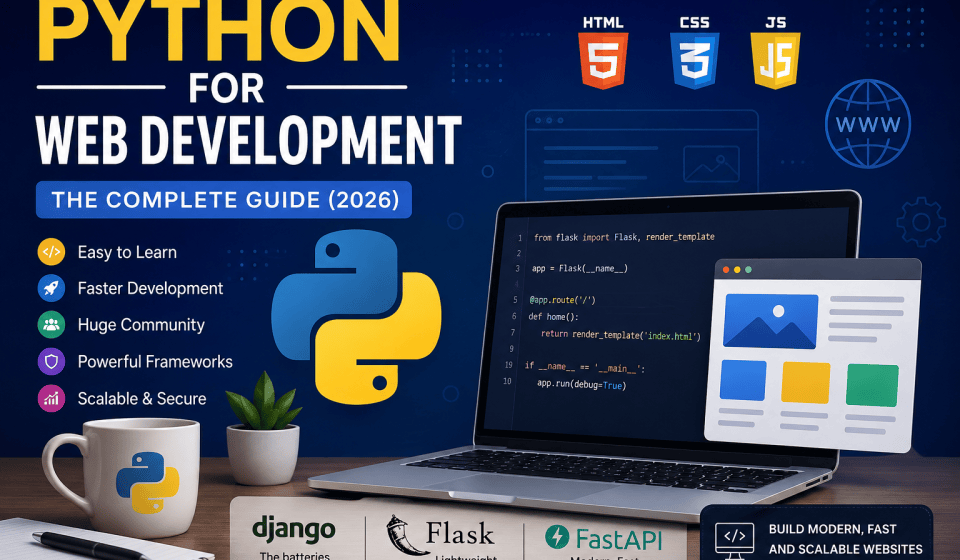
4. Powerful Frameworks
When it comes to web development, Python offers a variety of frameworks that make building websites a breeze.
Here are some of the most popular ones:
- Django
- Flask
- FastAPI
- Pyramid
Each of these frameworks caters to different project needs.
Django: The Most Popular Python Framework
Django is often referred to as the “batteries included” framework.
It comes packed with built-in features such as:
- User Authentication
- Admin Dashboard
- Security Protection
- Database Management
- URL Routing
- Form Handling
Big companies love Django for its security and scalability.
Flask: Lightweight and Flexible
Flask is a fantastic choice for beginners and smaller projects.
It gives developers the freedom to design their applications just the way they want.
Flask is often used for:
- Personal websites
- Portfolio sites
- APIs
- Startup MVPs
- Small business applications
FastAPI: Modern API Development
FastAPI has quickly become a favorite due to its impressive speed.
It’s commonly used for:
- REST APIs
- AI applications
- Machine Learning services
- Backend systems
Plus, it automatically generates API documentation, which is a nice bonus.
Advantages of Python Web Development
Simple Code
Python’s syntax is straightforward, making it easy to read and maintain.
Cross Platform
You can run Python applications on Windows, Linux, and macOS without a hitch.
Secure
Frameworks like Django come with built-in protections against common threats such as:
- SQL Injection
- Cross-Site Scripting (XSS)
- Cross-Site Request Forgery (CSRF)
Scalable
Python is versatile enough to handle everything from personal blogs to large enterprise applications.
Rich Libraries
With thousands of packages available through pip, Python’s library ecosystem is vast.
Some popular libraries include:
- Requests
- NumPy
- Pandas
- Pillow
- BeautifulSoup
Websites Built Using Python
You might be surprised to learn that many well-known websites are powered by Python!
Here are a few notable examples:
- Spotify
- Dropbox
- Quora
These companies choose Python for its reliability and scalability, making it a go-to language for web development.
Skills Required for Python Web Development
If you’re aiming to become a Python web developer, here are some essential skills to pick up:
- Python Basics
- HTML
- CSS
- JavaScript
- SQL
- Django or Flask
- Git & GitHub
- REST APIs
- Database Management
Career Opportunities
The demand for Python developers is soaring across the globe.
Here are some job roles you might consider:
- Python Developer
- Backend Developer
- Full Stack Developer
- API Developer
- Django Developer
- Flask Developer
- Software Engineer
Plus, there are plenty of remote work opportunities available!
Learning Resources
You can dive into Python through various resources, such as:
- The official Python documentation
- YouTube tutorials
- Online courses
- Coding bootcamps
- Hands-on practice projects
The best way to learn is by creating real-world applications.
Tips for Beginners
- Code every day to build your skills.
- Start with small projects to gain confidence.
- Familiarize yourself with Git and GitHub.
- Explore and read other developers’ code.
- Join communities of fellow developers.
- Keep experimenting and trying new things!
Final Thoughts
Python is set to remain a powerhouse in web development in 2026, thanks to its ease of learning, high productivity, and robust frameworks like Django and Flask.
Whether you’re crafting a personal blog, an eCommerce site, or a large-scale web application, Python offers the tools and flexibility you need to succeed.
If you’re just starting out in programming, investing your time in Python is a smart move!
Frequently Asked Questions
Is Python good for web development?
Absolutely! Python is one of the top choices for web development due to its simplicity, security features, and powerful frameworks.
Which Python framework should beginners learn?
Flask is a great starting point for beginners, while Django is fantastic for building comprehensive web applications.
Is Python faster than PHP?
While Python emphasizes developer productivity, the performance can vary based on the framework and how the application is designed. Both languages can create fast websites.