
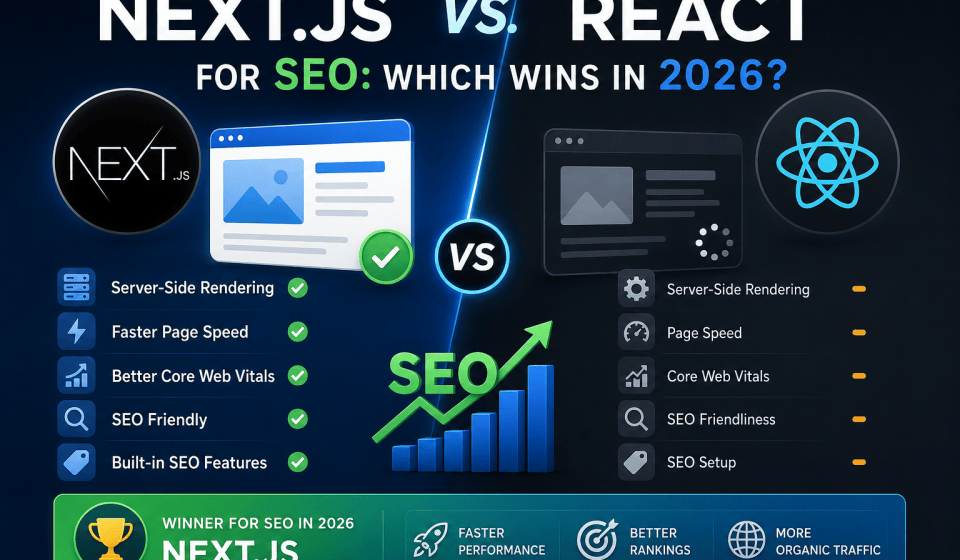

Search engine optimization (SEO) continues to be a crucial element for achieving website success in 2026. As developers create modern web applications, they frequently weigh the pros and cons of React versus Next.js to see which framework offers superior search engine visibility.
The quick takeaway? Next.js takes the lead for SEO in 2026.
What is React?
React is a widely-used JavaScript library that helps developers create user interfaces. It’s the backbone of millions of websites and web applications around the globe.
React SEO Challenges
Traditional React applications:
- Render content in the browser (Client-Side Rendering)
- May load content only after the page has fully loaded
- Can be slower for search engine crawlers to process
- Require some extra SEO configurations
While search engines can index React websites, getting top-notch SEO often means putting in some additional development effort.
What is Next.js?
Next.js is a framework built on React that aims to enhance performance, SEO, and the overall developer experience.
SEO Benefits of Next.js
- Server-Side Rendering (SSR)
- Static Site Generation (SSG)
- Quicker page loading times
- Improved Core Web Vitals
- Automatic image optimization
- Built-in metadata management
- Enhanced crawlability
These features make it easier for search engines to find and index your content effectively.
SEO Comparison: Next.js vs React
| Feature | React | Next.js |
|---|---|---|
| Server-Side Rendering | Requires setup | Built-in |
| Static Site Generation | Requires setup | Built-in |
| Page Speed | Good | Excellent |
| Core Web Vitals | Moderate | Excellent |
| Metadata Management | Manual | Built-in |
| Search Engine Crawling | Good | Excellent |
| SEO Friendliness | Moderate | Excellent |
Why Next.js is the Champion in 2026
- Lightning-Fast Loading Times
In the world of search engines, speed is everything. Next.js serves up pre-rendered pages that load in a flash, enhancing user experience and boosting your rankings.
- Superior Core Web Vitals
Core Web Vitals are still a big deal for search engines. With Next.js, you get built-in optimizations that help your site score higher on these important metrics.
- AI-Driven Search Optimization
By 2026, AI-powered search engines and assistants will be on the lookout for websites with well-structured, easily digestible content. Next.js simplifies the process of generating clean HTML and structured data.
- Enhanced Mobile Performance
With mobile-first indexing being crucial, Next.js shines here too. Websites built with Next.js typically perform better on mobile devices thanks to its optimized rendering techniques.
When Should You Opt for React?
Go for React if you’re:
- Crafting an internal dashboard
- Developing a web application with minimal SEO needs
- Building software tools that operate behind login systems
- Not overly concerned about SEO
When Should You Opt for Next.js?
Choose Next.js if you’re:
- Running a blog
- Creating a news site
- Launching an e-commerce platform
- Starting a business website
- Publishing content that relies on search traffic
For sites like Web Bharat, Next.js is often the smarter pick since SEO and organic traffic are key to growth.
Final Thoughts
And the winner is: Next.js 🏆
While React is still a fantastic UI library, Next.js takes the lead with its powerful features.


